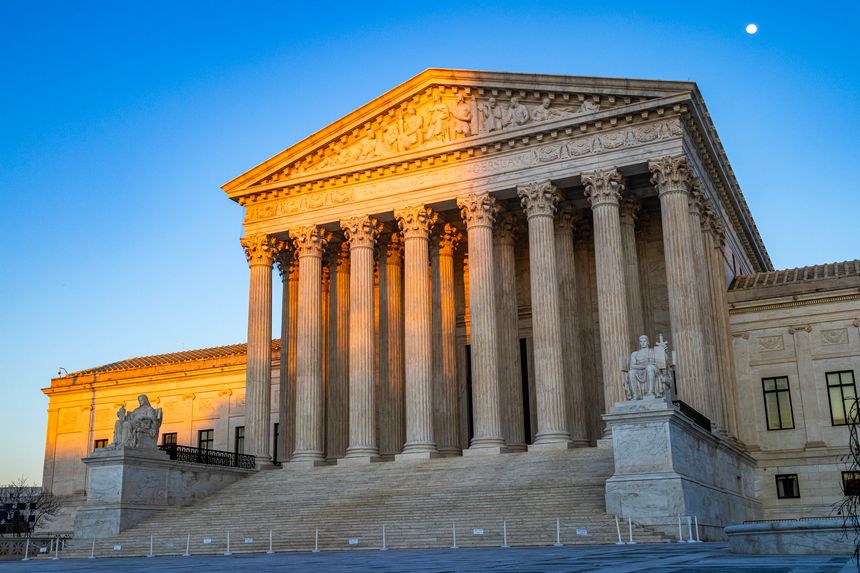


In Abouammo v. United States, the Supreme Court reversed the conviction of a defendant charged with violating 18 U.S.C. § 1519, the Sarbanes-Oxley obstruction-of-justice statute that criminalizes knowing falsification of a document with the intent to obstruct a federal investigation, because the trial court lacked venue.
The defendant’s trial took place in the district where the investigation he allegedly obstructed occurred, which was different from the district where he actually falsified the document. This was improper, the Supreme Court held, because the defendant completed the crime as soon as he falsified the document, which meant that his trial should have occurred in the district where the falsification occurred.
Abouammo determines once and for all how to determine where venue is proper in prosecutions under Section 1519, and it provides important guidance on how to conduct the venue analysis for a broad array of federal criminal statutes.
Background
While employed at a social media company in its San Francisco office, Ahmad Abouammo sold confidential information about two Saudi dissidents posting on the company’s platform to a high-level Saudi official for $300,000. Abouammo then left the company and relocated to Seattle.
FBI agents based in San Francisco began investigating, and eventually they flew to Seattle to interview Abouammo at his home. During that interview, Abouammo denied giving the Saudi official confidential information and said the payments were for consulting work. When the agents asked Abouammo for documents supporting his story, Abouammo went upstairs, created a fake invoice and emailed it to one of the agents. After the interview, the agents returned to San Francisco, where they determined that the invoice was fake.
A grand jury in the Northern District of California charged Abouammo with violating 18 U.S.C. § 1519, which prohibits knowingly falsifying a document with the intent to obstruct a federal investigation. Abouammo argued, however, he could be tried for violating Section 1519 only in the district encompassing Seattle (the Western District of Washington), where the alleged falsification of the invoice had occurred. The district court denied the motion, holding that venue exists also in the district court where the obstructed investigation took place (here, the Northern District of California).
A jury convicted Abouammo, and the Ninth Circuit affirmed. As to venue, the Ninth Circuit explained that venue lies wherever the “conduct constituting the offense” took place, whether in whole or in part. Venue would have been proper in the Western District of Washington, the court of appeals held, because one “essential conduct element[ ]” of Section 1519 is falsification of a document, which occurred in Seattle. But Section 1519’s intent requirement—specifically, “with the intent” to “obstruct” an investigation—made the “contemplated effects” of the falsification another “part of the essential conduct of [a Section 1519] offense.” As a result, the Ninth Circuit held, venue also lies “where the investigation” the defendant “intended to stymie is ongoing or contemplated”—here, San Francisco, in the Northern District of California.
Holding
The Supreme Court reversed, holding that a defendant charged with violating Section 1519 must be tried in the district where the falsification occurred.
The Constitution contains two independent provisions that address venue in criminal cases: (1) in Article III, which instructs that “Trial of all Crimes” shall “be held in the State where the said Crimes shall have been committed,” and (2) in the Sixth Amendment, which provides defendants the right to a jury “of the State and district wherein the crime shall have been committed” (emphases added).
To decide where the crime “shall have been committed,” courts generally must determine the location of the offense’s “essential conduct elements,” meaning the things a defendant must do to violate the statute at issue. And then the court must ascertain the “location” of those “criminal acts”—the place where their “commission” occurred.
Under that framework, the venue for trying a Section 1519 offense must be where the defendant engaged in conduct constituting falsification, because that is the only prohibited act under the statute: “Once a person has committed that act (with the requisite intent), he need do nothing more to violate the law.” Contrary to the Ninth Circuit’s conclusion, a defendant’s mens rea has no bearing on venue.
The Court, however, noted an “important qualification” to this general framework: “The cases in which we have used the ‘conduct elements’ test are all ones in which Congress did not specify a venue rule to accompany a given offense.” Statutes that contain venue provisions may not be subject to the same analysis, even though the “venue rule is constitutional, and Congress lacks the power to finally decide what it means or when it is violated.”
Key Takeaways
Conduct-focused analysis. A defendant’s intent may be an essential element of a crime but have no bearing at all on venue. Under Section 1519—a tool prosecutors have used frequently since the statute’s enactment as part of Sarbanes-Oxley in 2002—a defendant may face criminal liability simply by falsifying a document with the requisite intent, even if she simply put the document in a drawer and showed it to no one. Section 1519 thus differs from many federal obstruction statutes that require a showing of some impact on an investigation. Defense counsel thus should undertake a conduct-focused analysis of the elements of each charge to determine what specific actions violate the statute and dictate the proper venue.
Preserve venue objections. Although the venue rule is constitutional, courts have held that venue is non-jurisdictional in the criminal context, is subject to waiver in a criminal case, and does not trigger the Double Jeopardy Clause. Nevertheless, defense counsel should stay alert for venue objections, especially in obstruction-of-justice prosecutions or other cases where a defendant is indicted in a district where he did not engage in relevant conduct.
Statutory venue provisions. The Court’s brief discussion of statutes that contain a venue provision raises more questions than it answers. The Court explained that, because the right to proper venue is constitutional, Congress does not have the power to legislate the scope of venue. Yet the Court also acknowledged that some statutes do prescribe rules for venue and that the Court has “sometimes suggested that Congress’s view of appropriate venue, even if not coincident with our ‘conduct elements’ test, may make a difference to the analysis.” But what difference it makes remains unclear. Specifically, it remains to be seen whether the Court would uphold a statutory venue provision that did not satisfy the conduct-elements test. If so, then it would seem that Congress does have the power to legislate the scope of the constitutional venue provisions. And if not, then it would seem that “Congress’s view of appropriate venue” makes little, if any, “difference to the analysis.” The Abouammo Court, however, had no need to address that issue because Section 1519 has no associated venue provision. But defendants charged under statutes with venue provisions should consider challenging venue on constitutional grounds if another appropriate venue exists.
You can sign up to receive White Collar Appeal email updates by clicking here.
/Passle/67ead9999050990b49b427a6/MediaLibrary/Images/2026-09-18-22-26-44-253-6aadbaa45f15d498f769c4c9.jpeg)
/Passle/67ead9999050990b49b427a6/SearchServiceImages/2026-09-15-14-22-32-713-6aa954a8e451314850d206ec.jpg)
/Passle/67ead9999050990b49b427a6/SearchServiceImages/2026-09-08-12-42-23-438-6aa002af5357362d682e3eac.jpg)