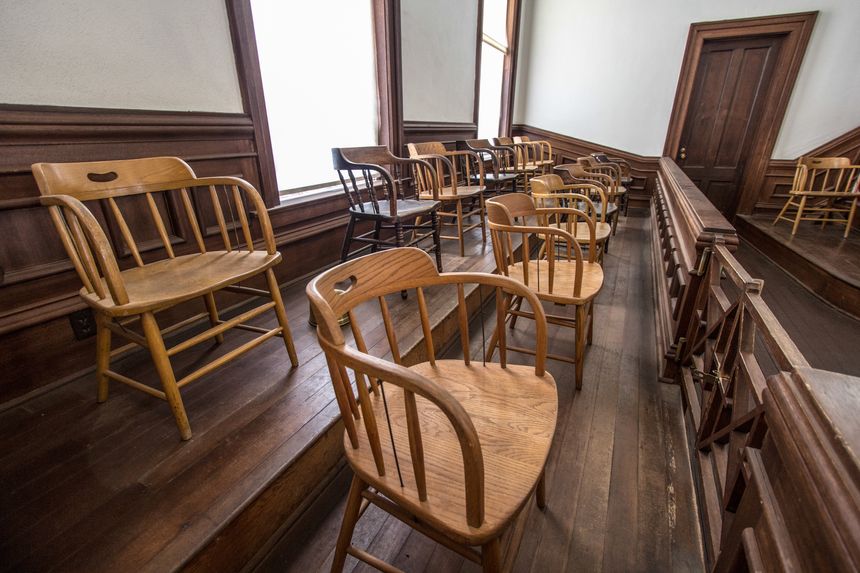

- The Sixth Amendment’s guarantee of an impartial jury is settled doctrine, but the procedural mechanics, such as when bias must be raised, who bears the burden of proof, what the trial court must do, and how appellate courts review what it did, remain a moving target.
- In United States v. Bolandian, the Ninth Circuit vacated an insider-trading conviction because the district court failed to conduct an adequate investigation where a juror voiced concern about his ability to be impartial, notwithstanding defense counsel’s repeated agreement that the juror could continue to serve. Weeks later, in United States v. Sanchez, the Ninth Circuit again ordered a new trial where a juror made racially biased comments about the defendant during deliberations, even though the juror was excused before the jury rendered a verdict. By contrast, in United States v. Williamson, the Fourth Circuit affirmed a conviction where a juror lied during voir dire about having been the target of federal investigation similar to the one that led to the defendant’s trial.
- Read together, the combined lesson for defense counsel is to raise bias concerns on the record as early as possible, insist on a meaningful investigation, and preserve structural-error and personal-waiver theories for appellate development.
Background
Bolandian. Shahriyar Bolandian and Ashish Aggarwal, college friends who graduated in 2010, remained close as Aggarwal pursued a career in investment banking in San Francisco and Bolandian traded stocks from Los Angeles. Between 2012 and 2013, Bolandian made two trades ahead of acquisitions on which Aggarwal’s bank was advising. After the second transaction closed, Aggarwal told a colleague over dinner that he had “he let [the deal] slip once or twice to [Bolandian] before the acquisition,” which became a centerpiece of the government’s case.
A grand jury charged Aggarwal, Bolandian, and a third defendant with conspiracy, insider trading, tender‑offer fraud, and wire fraud, and charged Bolandian alone with money laundering. Aggarwal’s case was severed and tried first; the jury acquitted him on 26 and hung on four, which were later dismissed.
Bolandian’s trial began in April 2024. On the second day, a juror disclosed that his uncle operated a private investment firm that had done business with Aggarwal’s and might have a relationship with a bank witness set to testify that day. The court conducted a brief inquiry, which included the following questions and answers:
THE COURT: As far as you’re concerned, do you still feel that you can be fair to both sides in this matter?
JUROR #6: Honestly, I am not sure, Your Honor.
THE COURT: Well, you’re not sure whether you can be fair?
JUROR #6: Yes, Your Honor.
THE COURT: Well, that’s probably a good thing since you haven’t heard all the evidence yet. Once you’ve heard all of the evidence and you still feel that way, you should let the Court know.
JUROR #6: Yes, Your Honor.
THE COURT: All right. Thank you.
Defense counsel stated on the record that there was no objection to the juror’s continued service and reaffirmed that position after closing arguments. The juror remained on the panel and ultimately became the foreman, and the jury returned a guilty verdict.
Williamson. During voir dire in this drug-and-gun case, a prospective juror disclosed that he had served in law enforcement for 33 years, including as Chief of Police for a city in West Virginia, a deputy sheriff in a county in Florida, and another police department in West Virginia. That led to a lengthy colloquy about his frequent use of confidential informants and other familiarity with investigative techniques, but the juror stated that his background would not affect his impartiality. When asked whether he or his immediate family had ever been involved in any conflict, controversy, or litigation with the United States or the U.S. Attorney’s Office, he said no.
In truth, however, during his time as Chief of Police, the juror had been the target of a federal public‑corruption investigation. That investigation focused on the Sheriff of Mingo County, West Virginia, who owed money to a local drug dealer named George White who had helped finance the Sheriff’s campaign. To avoid paying that debt, the Sheriff arranged for a confidential informant to purchase drugs from his White. The juror then helped secure a search warrant and indictment of White. White cried foul, and investigators then began to focus on the Sheriff, the Juror, and other public officials in Mingo County who came to be known as “Team Mingo.” During the investigation into Team Mingo, the juror “approached [the Sheriff’s wife] to express his displeasure with her for turning over the [Sheriff’s] hard drive” in connection with the investigation and arranged for a deputy in the Sheriff’s office who was working with the FBI to be demoted. He also removed documents from his office and hid them in his garage for a period of time. Although the juror was not among those the government ultimately indicted, he understood he was a target of the investigation and participated in a proffer with investigators.
None of this came to light until after the jury had convicted Williamson at trial and the case on appeal. At that point, the district court held an evidentiary hearing and found that the juror’s voir dire responses were untrue and “designed to avoid revelation of th[is] tumultuous period in his life.” Yet the district court also found that there was nothing in the record indicating actual bias and that the juror’s responses instead indicated, “if anything, indifference.” The district court also concluded that it would not have struck the juror for cause even with full disclosure.
Sanchez. Andres Sanchez, a tax preparer of Mexican heritage worked at a Boise business serving Spanish-speaking clients. He was tried on seven counts of aiding and assisting the preparation of false tax returns under 26 U.S.C. § 7206(2). The jury deliberated for the better part of two days. On the morning the panel was poised to return a partial verdict, the district court learned that a juror had approached court staff about “some racism” in the jury room and had handed over a handwritten note describing two episodes of derisive comments aimed at the LGBTQ and Spanish-speaking communities.
The ensuing inquiry revealed that during deliberations another juror, Juror Number 5, had interjected with a comment to the effect that “the Mexicans, all they want to do is screw us over anyway.” Earlier, when the jury was discussing Sanchez’s employer, Fiesta Pro Services, a juror had also suggested that the business “could have come up from the cartel.” After conducting a special voir dire of every juror, individually and on the record, in the presence of counsel, the district court found that Juror Number 5 had made at least one statement reflecting anti-Mexican bias, determined that the juror therefore could not be “fair and impartial,” excused that juror, and charged the remaining 11 jurors to resume deliberations. Thirteen minutes later, the eleven-juror panel returned a partial verdict of guilt on six counts.
Holdings
Bolandian: A Non‑Waivable Duty to Investigate
The Ninth Circuit vacated and remanded for a new trial, holding that the district court failed to conduct an adequate investigation and, because a meaningful investigation is a prerequisite to a knowing waiver of a juror‑bias claim, the defendant merely forfeited, rather than waived, an objection based on juror bias. As a result, the court held the objection should be subject to plain-error review.
The panel grounded its analysis in Remmer v. United States, 347 U.S. 227 (1954), which requires that bias allegations be resolved through a hearing with party participation; Smith v. Phillips, 455 U.S. 209 (1982), which charges trial judges with remaining “ever watchful” for prejudicial occurrences; and Dyer v. Calderon, 151 F.3d 970, (9th Cir. 1998), which held that when bias is credibly alleged, the court bears an independent responsibility to investigate, rather than relying on defense counsel to do so.
Bolandian confronted the question left open by those decisions: whether counsel’s agreement that a juror who has expressed possible bias may remain can waive the court’s investigative duty. The Ninth Circuit held that counsel’s consent cannot waive the trial court’s independent investigative duty. “Waiver requires an intentional relinquishment or abandonment of a known right,” and without a reasonable investigation, the right is not “known” in any meaningful sense; counsel’s “uninformed representation to the court is not alone sufficient evidence of waiver.” The court expressly declined to decide two broader questions it identified—whether juror bias is structural error that can never be waived, and whether, as a “fundamental” right, bias claims require personal waiver by the defendant rather than through counsel.
Reviewing for plain error, the panel found the error obvious. Juror Number 6 “never affirmatively stated that [he] could be impartial.” He simply said he was “not sure” he could be impartial—not even the “I’ll try” formulations the circuit previously had rejected as insufficient. With respect to the remaining plain-error prongs, the court relied on settled Ninth Circuit law that the presence of a biased juror is categorically prejudicial. And here there were particular reasons to question whether the bias played a role: Juror Number 6 served as the jury foreman, and Bolandian’s codefendant, whose trial was severed from Bolandian’s, was largely acquitted of the same conduct.
Williamson: Deference and the Standard of Review
The Fourth Circuit affirmed Williamson’s conviction, holding that the district court did not abuse its discretion in denying a new trial. Framing the case around the standard of review, the court emphasized that denials of new trials based on juror nondisclosure receive substantial deference: factual findings are reviewed for clear error, credibility and impartiality determinations receive “special deference,” and reversals are warranted only for “manifest error.”
On actual bias, the court rejected Williamson’s contention that intentional non disclosure of relevant information during voir dire establishes partiality. The court reaffirmed that the touchstone is whether the juror could be impartial, and while dishonesty is evidence of bias, it is not dispositive. The district court’s finding that the juror was indifferent, rather than biased, thus was not manifestly erroneous.
In the absence of a finding of actual bias, the Fourth Circuit reviewed for implied bias. But that is reserved for “extreme situations,” such as jurors who are employees of the prosecuting agency, close relatives of trial participants, or direct participants in the events at issue. The panel distinguished Willamson from a prior case where the prosecutor was actively investigating a juror, noting that criminal exposure the Chief of Police had was more than a decade old and time‑barred.
Sanchez: Intrajury Racial Bias and Remmer’s Rebuttable Presumption
Finally, in Sanchez, a split panel held that when a racially biased juror participates in deliberations but is excused before the verdict is accepted, Remmer v. United States, 347 U.S. 227 (1954), applies, under which there is a heavy presumption of prejudice that the government bears the burden of rebutting. The district court, however, erroneously applied United States v. Sarkisian, 197 F.3d 966 (9th Cir. 1999), under which the question is whether the biased remarks “so affected the jury’s ability to consider the totality of the evidence fairly that it tainted the verdict.” In dissent, Judge Carlos T. Bea held that the district court correctly relied on Sarkisian and correctly denied Sanchez’s motion for a new trial.
Applying the Remmer standard, the majority identified three failings in the government’s attempt to rebut the presumption of prejudice. First, multiple jurors heard Juror Number 5’s biased comments and may have been influenced by them, notwithstanding that each one denied any such influence. Second, Juror Number 5’s racial bias may have infected his assessment of the evidence, and, having participated in all but 13 minutes of deliberations, his tainted assessment may have influenced other jurors’ assessment. Third, the district court did not instruct the remaining jurors to disregard prior deliberations and begin anew, a step the majority viewed as especially important given that the original 12-juror panel had reached a partial verdict with Juror 5 in the room.
Key Takeaways
These decisions give confusing guidance about when to credit jurors’ responses about bias. Anyone who has picked a jury knows that courts ordinarily are reluctant to second-guess jurors’ confirmation that they can be unbiased. So too when jurors are asked to disregard unduly prejudicial testimony that has come into evidence. Williamson seems consistent with that approach, where the district court credited the juror’s claim that he wasn’t biased by having been a target of a federal investigation, even though he deliberately withheld that fact during voir dire. In Sanchez, by contrast, even though every juror confirmed that the excused juror’s racist comments would not affect their ability to be fair and impartial, the Ninth Circuit held that the district court erred in crediting those statements. And yet in Bolandian, the district court erred by not investigating a juror’s (apparently credible) disclosure that he was unsure if his tangential relationship to a witness would affect his ability to be impartial. It is difficult to identify a unifying principle for district courts when faced with similar issues.
One potential explanation is that racial animus is categorically distinct, but even then, it is not clear what else the district court should have done to assure that the remaining 11 jurors could be fair. According to Judge Bea’s dissent, the majority’s “distrust of jurors’ statements of impartiality … amounts to a catch-22”: either the juror admits that the racist comment affected her ability to be impartial, in which case the juror is tainted, or the juror denies being affected, in which case the juror might still be tainted even if she is not aware of it.
The upshot for defense counsel, however, is clear. Defendants should raise issues of juror bias early and often, press the district court to conduct detailed examinations of jurors’ claims of impartiality, and preserve these issues for appeal. Although admittedly the defendant in Bolandian actually may have benefitted from his counsel’s failure to press the issue—which might have spurred the district court to conduct an adequate investigation and thereby cured the error—no one should bank on the distinction between waiver and forfeiture and an improbable victory on plain-error review.
Sarkisian appears to be a dead letter. Sarkisian, on which the district court relied in denying Sanchez’s new-trial motion, held that the defendant was not prejudiced by an excused juror’s racist comment because there was no showing that the comment “so affected the jury’s ability to consider the totality of the evidence fairly that it tainted the verdict.” And both the Sanchez majority and the dissent agreed there were numerous factual parallels between the two cases. Yet the majority disagreed with the reasoning of Sarkisian and reimagined that decision’s brief allusion to Remmer in a footnote as an alternative holding and application of Remmer. The upshot is that Sanchez appears to have overruled Sarkisian and limited its precedential value to its passing remark that the facts of that case satisfied Remmer.
Two reserved questions worth preserving in every juror-bias brief. Bolandian expressly declined to decide whether juror bias is structural error that can never be waived and whether, as a “fundamental” right, bias claims require personal waiver by the defendant rather than counsel’s. Defendants should continue to make those arguments and preserve them in case future panels or the Supreme Court takes them up.
You can sign up to receive White Collar Appeal email updates by clicking here.
/Passle/67ead9999050990b49b427a6/MediaLibrary/Images/2026-09-18-22-26-44-253-6aadbaa45f15d498f769c4c9.jpeg)
/Passle/67ead9999050990b49b427a6/SearchServiceImages/2026-09-15-14-22-32-713-6aa954a8e451314850d206ec.jpg)
/Passle/67ead9999050990b49b427a6/SearchServiceImages/2026-09-08-12-42-23-438-6aa002af5357362d682e3eac.jpg)