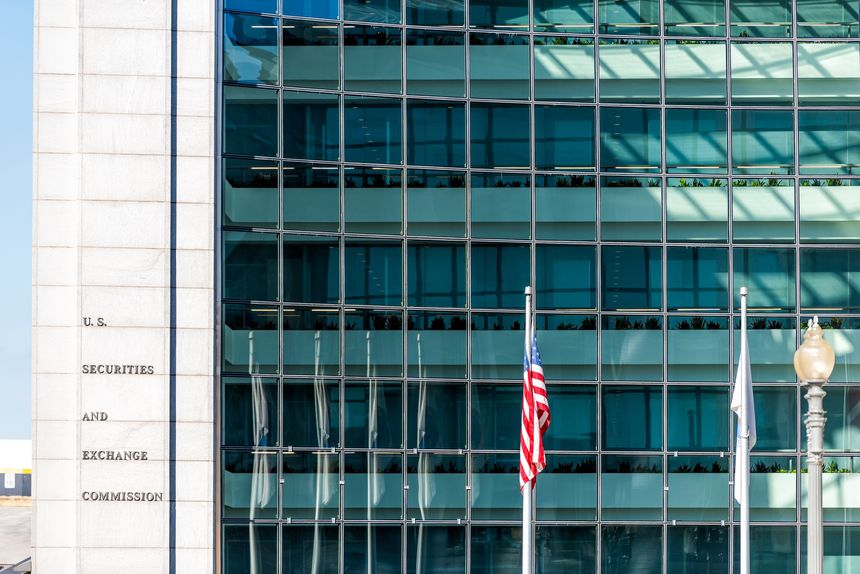

Few episodes in recent SEC rulemaking history better illustrate the costs of regulatory ambiguity than the multi-year saga surrounding Rule 15c2-11. The Commission launched what it billed as a routine modernization of a 1971 broker-dealer quoting rule and ended up triggering a prolonged disruption of the fixed-income markets that it is now formally working to correct. On March 16, 2026, the SEC proposed amendments to limit Rule 15c2-11 explicitly to equity securities, and Commissioner Hester Peirce issued a characteristically candid statement welcoming the proposal while pulling no punches about how the agency got there.
Origins of the Rule
Rule 15c2-11 governs the publication or submission of quotations for securities in a quotation medium other than on a national securities exchange. When it was issued in 1971, its focus was on thinly traded penny stocks — securities for which there was little publicly available information and, therefore, a heightened risk of fraudulent and manipulative activity, particularly with regard to retail investors. For decades, market participants understood it to apply exclusively to OTC equity securities, a common-sense reading that reflected both the rule's history and the market abuses it was designed to address.
The 2020 Amendments and the Fixed-Income Surprise
In 2020, the SEC amended Rule 15c2-11 to prohibit broker-dealers from providing price quotations in OTC securities unless specified information about the issuer is current and publicly available. What the amendments did not do was say anything about fixed-income securities; the word "fixed income" did not appear once in the adopting release. Yet as the compliance date approached, the Commission began signaling that the amended rule applied to debt securities too, catching the market off guard.
Industry participants pushed back. They pointed out that the rule's requirements and exemptions were written with equity markets in mind, that the 2020 amendments relied entirely on OTC equity data, and that they were unaware of Rule 15c2-11 ever having been applied to fixed income securities. They warned that applying the rule to fixed income would harm the market and investors with no discernible reduction in fraud.
The Commission's response, in Commissioner Peirce's telling, was the wrong one. Rather than granting long-term no-action relief while assessing whether the application of the rule to the fixed-income market was appropriate, the Commission mostly issued several rounds of limited staff no-action letters, sometimes for as short a period as three months, that were claimed to provide the fixed-income industry with sufficient time to come into compliance.
A Cascade of Temporary Fixes
What followed was a years-long sequence of stopgap measures. Over the last few years, the SEC staff issued several different versions of relief from the Rule 15c2-11 requirements, including a November 2022 no-action letter expiring on January 4, 2025, covering fixed-income securities, and October 2023 exemptive relief with no expiration date covering fixed-income securities offered and sold pursuant to Rule 144A. Then, in November 2024, the Division of Trading and Markets issued a further no-action letter extending relief for the remaining subset of fixed-income securities indefinitely — a de facto acknowledgment that compliance was never going to be workable.
Eventually, the Commission issued permanent exemptive relief for some fixed-income securities and the staff issued permanent no-action relief for another subset. But by then, the agency had fostered uncertainty in the market and wasted the resources of the industry, and its own staff, for multiple years — and for no good reason.
Commissioner Peirce's Mea Culpa
Commissioner Peirce's statement is notable not only for its critique of the process but for its personal candor. She acknowledged blaming herself for failing to ensure that the scope of the rule's application was made crystal clear during the adoption of the 2020 amendments — while being careful to absolve staff, who she said were simply following a directive to read the rule more broadly than its history and market reality warranted.
Her statement also looks forward, flagging open questions the proposed amendments have yet to fully resolve, including the rule's application to crypto assets and the appropriate treatment of the so-called "expert market," the segment of the OTC market accessible only to sophisticated investors. She encouraged commenters to engage on whether the proposal, if adopted, would fully resolve the tension between the rule's text and its appropriate real-world application.
Significance of the Proposed Amendments
The proposed amendments represent more than a technical fix. They are a formal acknowledgment that a prolonged episode of regulatory overreach, however unintentional, imposed real costs on market participants and undermined confidence in the rulemaking process. By explicitly limiting Rule 15c2-11 to equity securities through a formal amendment rather than continued staff guidance, the Commission would give the fixed-income market the durable legal clarity that no-action letters, by their nature, cannot provide.
There is also a broader lesson here about the risks of regulatory ambiguity. When a rule's scope is left undefined, enforcement risk fills the vacuum, and market participants, particularly those in large and liquid markets like fixed income, bear the cost. The Rule 15c2-11 episode is a case study in how quickly that dynamic can escalate, and how much harder it is to correct course than to get the scope right the first time.
/Passle/67ead9999050990b49b427a6/SearchServiceImages/2026-09-08-12-42-23-438-6aa002af5357362d682e3eac.jpg)
/Passle/67ead9999050990b49b427a6/SearchServiceImages/2026-09-02-21-16-43-932-6a98923b1f4ad09057fea213.jpg)
/Passle/67ead9999050990b49b427a6/SearchServiceImages/2026-08-21-17-26-22-381-6a888a3efb7086a3130ab44b.jpg)