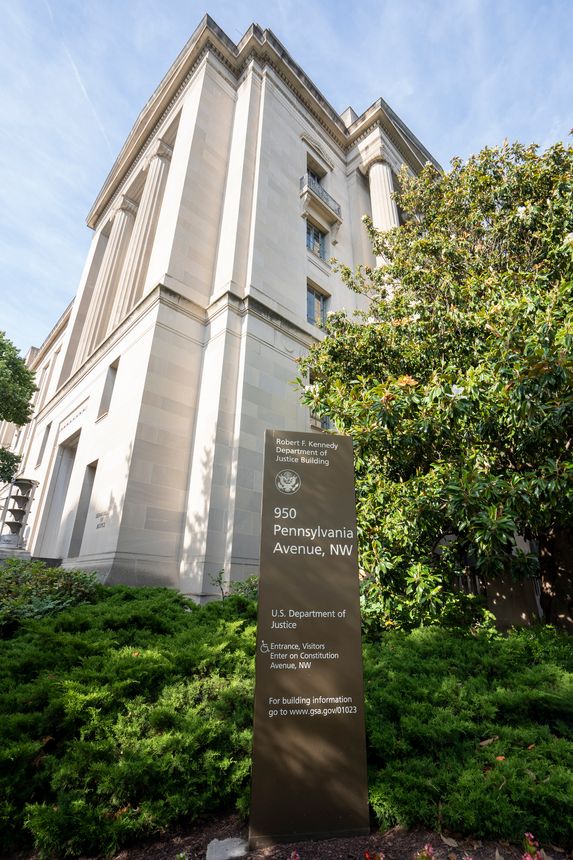



On March 10, 2026, the U.S. Department of Justice announced a Department-wide Corporate Enforcement Policy (CEP) that applies, for the first time, to all criminal cases involving corporations. The policy is intended to promote uniformity, predictability, and fairness in corporate criminal enforcement and to standardize incentives for voluntary self-disclosure across DOJ components.
The announcement follows closely on the heels of the announcement of a new corporate cooperation policy by the U.S. Attorney's Office for the Southern District of New York. On February 24, 2026, just two weeks earlier, SDNY announced its own Corporate Enforcement and Voluntary Self-Disclosure Program for Financial Crimes. The DOJ's new policy expressly supersedes existing component-specific and U.S. Attorney's Office-specific corporate enforcement policies across the Department, suggesting that SDNY's program has been effectively displaced almost immediately following its launch.
A Framework Built on Presumptive Declinations
The centerpiece of the new CEP is a strong presumption in favor of declination for companies that: voluntarily self-disclose misconduct previously unknown to DOJ, fully cooperate, and timely remediate. In those cases, absent aggravating circumstances, the Department will decline to prosecute. And even where aggravating circumstances exist, prosecutors retain discretion to recommend a declination anyway, weighing the severity of those circumstances against the quality of the company's cooperation and remediation efforts.
The declination presumption comes with one notable carve-out: the whistleblower exception. Under the CEP, a company does not lose its path to declination simply because a whistleblower has already reported internally and/or submitted a complaint to the Department. The company can still qualify for a declination provided it self-reports to DOJ as soon as reasonably practicable, and no later than 120 days after receiving the whistleblower's internal report, and otherwise meets the CEP's requirements.
How the CEP Differs from the SDNY Program
The CEP program differs from the SDNY program in two significant respects.
The most significant difference is that the SDNY program provides for an early conditional declination — essentially, an upfront assurance that prosecution will be declined if a company satisfies its cooperation and remediation obligations. This gives companies meaningful certainty at the outset of their engagement with the government.
The CEP does not. It makes declinations presumptively available for qualifying companies, but does not establish a formal process for obtaining an early conditional assurance. Companies engaging under the CEP will cooperate and remediate without the same defined endpoint that SDNY's program offers.
The second substantive difference is that the SDNY program applies only to financial crimes involving fraud or misconduct affecting market integrity, while the CEP applies broadly to all corporate criminal matters, with the sole exception of antitrust violations.
The SDNY Program's Uncertain Status
The rapid succession of these two announcements raises questions about the continued status of the SDNY program. The CEP provides that it supersedes existing component-specific and U.S. Attorney's Office-specific corporate enforcement policies, which would appear on its face to displace SDNY's program. That said, DOJ has not said that expressly, and it is possible that further guidance will clarify whether SDNY's distinctive features will operate independently of—or as a complement to—the CEP, or whether they will be superseded by the CEP.
Practical Implications
Regardless of whether the SDNY policy remains operational, the back-to-back announcements underscore DOJ's emphasis on voluntary self-disclosure and corporate cooperation as central tools in white-collar enforcement. For companies facing potential criminal exposure, each policy reinforces the importance of:
maintaining compliance programs capable of detecting misconduct early;
conducting prompt internal investigations when issues arise, particularly where an internal whistleblower complaint has been received;
carefully evaluating whether and when to voluntarily disclose potential violations to the government, keeping in mind the 120-day window in whistleblower situations; and
documenting remediation and compliance improvements.
However the policies ultimately are reconciled with each other, each makes clear that DOJ is serious about establishing an underlying, consistent framework for corporate self-disclosure — one that offers meaningful incentives for companies that identify, report, and remediate misconduct before the government comes knocking.
/Passle/67ead9999050990b49b427a6/SearchServiceImages/2026-10-19-15-30-35-632-6ad6379bae4a5d2dfac6b02d.jpg)
/Passle/67ead9999050990b49b427a6/SearchServiceImages/2026-10-02-18-45-20-021-6abffbc07f63a687f5e5151c.jpg)
/Passle/67ead9999050990b49b427a6/MediaLibrary/Images/2026-09-18-22-26-44-253-6aadbaa45f15d498f769c4c9.jpeg)