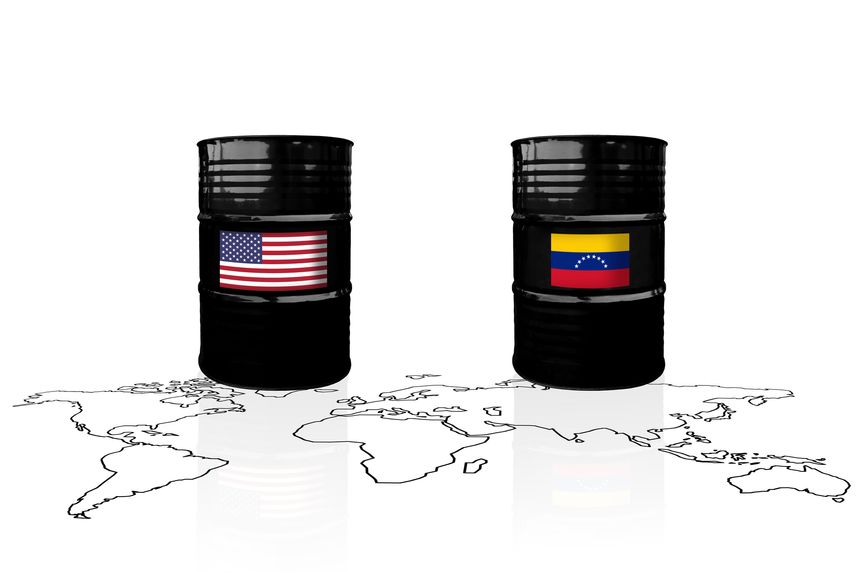




On January 29, 2026, the U.S. Department of the Treasury’s Office of Foreign Assets Control (“OFAC”) issued a general license authorizing certain transactions related to Venezuelan-origin oil. See OFAC, Venezuela Sanctions Regulations, General License No. 46, “Authorizing Certain Activities Involving Venezuelan-Origin Oil” (Jan. 29, 2026), available here https://ofac.treasury.gov/media/934886/download?inline. Subject to the restrictions discussed below, this general license—the first Venezuela-related action by OFAC since the United States’s capture of Nicolás Maduro on January 3, 2026—generally permits U.S. companies to engage in Venezuelan-origin oil-related business.
Although Venezuela has never technically been subject to comprehensive U.S. sanctions (like those currently imposed on Cuba, Iran, North Korea, and certain Russian government-controlled regions of Ukraine), since August 5, 2019, U.S. sanctions have “blocked” all property and interests in property of the “Government of Venezuela,” defined to include Petróleos de Venezuela, S.A. (“PdVSA”) and companies owned or controlled by PdVSA. As a result, except for certain limited transactions that OFAC has periodically authorized since 2019, including certain transactions related to Chevron Corporation joint ventures in Venezuela, U.S. persons have generally been prohibited from engaging in transactions with or relating to PdVSA.
OFAC’s new general license authorizes all transactions by “established U.S. entit[ies]” with the Government of Venezuela, PdVSA, or any entity owned 50% or more by PdVSA “that are ordinarily incident and necessary to the lifting, exportation, reexportation, sale, resale, supply, storage, marketing, purchase, delivery, or transportation of Venezuelan-origin oil.” The general license is explicit that the authorization includes “arranging shipping and logistics services” and “commercially reasonable” “swaps of crude oil, diluents, or refined petroleum products.”
Notwithstanding this broad authorization, the general license contains a few key restrictions, which U.S. companies need to pay close attention to.
First, the authorization only applies to “established U.S. entit[ies],” which the general license defines as an entity organized under the laws of the United States or any jurisdiction within the United States on or before January 29, 2025. In other words, a U.S. entity created today cannot rely on the general license.
Second, any contract for transactions authorized by the general license must include U.S. choice-of-law and forum selection clauses, and any payments to U.S.-sanctioned persons (including the Government of Venezuela and PdVSA) must be made into the U.S. government-controlled account created by Executive Order 14373 for Venezuelan-origin oil-related revenue. In addition, all payment terms must be “commercially reasonable,” and payments cannot be made in gold or any digital currency associated with the Government of Venezuela.
Third, the general license does not authorize transactions with entities located in or organized under the laws of Russia, Iran, North Korea, or Cuba, or with entities owned or controlled by persons from those countries. The license also bars transactions with any entity in Venezuela or the United States that is owned or controlled by, or in a joint venture with, a person located in or organized under the laws of China.
Lastly, the general license imposes a reporting requirement for persons exporting Venezuelan-origin oil pursuant to the general license to countries other than the United States.
OFAC’s general license represents a significant opening of the Venezuelan oil industry for U.S. business less than a month after the capture of Nicolás Maduro. With that said, the general license’s restrictions, as well as the remaining geopolitical uncertainty regarding Venezuela and U.S. action, create significant compliance challenges for U.S. companies looking to start (or restart) business in Venezuela. U.S. companies would be well-advised to develop deliberate strategic plans for such business—that take into account both the economic opportunity as well as the regulatory/legal risks and challenges—before engaging in any specific transactions.
/Passle/67ead9999050990b49b427a6/MediaLibrary/Images/2026-09-18-22-26-44-253-6aadbaa45f15d498f769c4c9.jpeg)
/Passle/67ead9999050990b49b427a6/SearchServiceImages/2026-09-15-14-22-32-713-6aa954a8e451314850d206ec.jpg)
/Passle/67ead9999050990b49b427a6/SearchServiceImages/2026-09-08-12-42-23-438-6aa002af5357362d682e3eac.jpg)